Based in Ashville, Alabama · Established in 2015 On call 24 hours a day

Wheelchair Lift Sales, Installation, Service & Repair

Wheelchair Lifts in Alabama

A wheelchair lift can provide a practical way to move between nearby levels without requiring the user to leave a compatible wheelchair or mobility device.

Based in Ashville, Ray Strong Elevators sells, installs, services and repairs wheelchair lifts throughout the Birmingham, Huntsville–Decatur and Montgomery areas, along with surrounding Alabama communities.

Call About a Wheelchair Lift

Tell us about the property, level change and person who will use the lift.

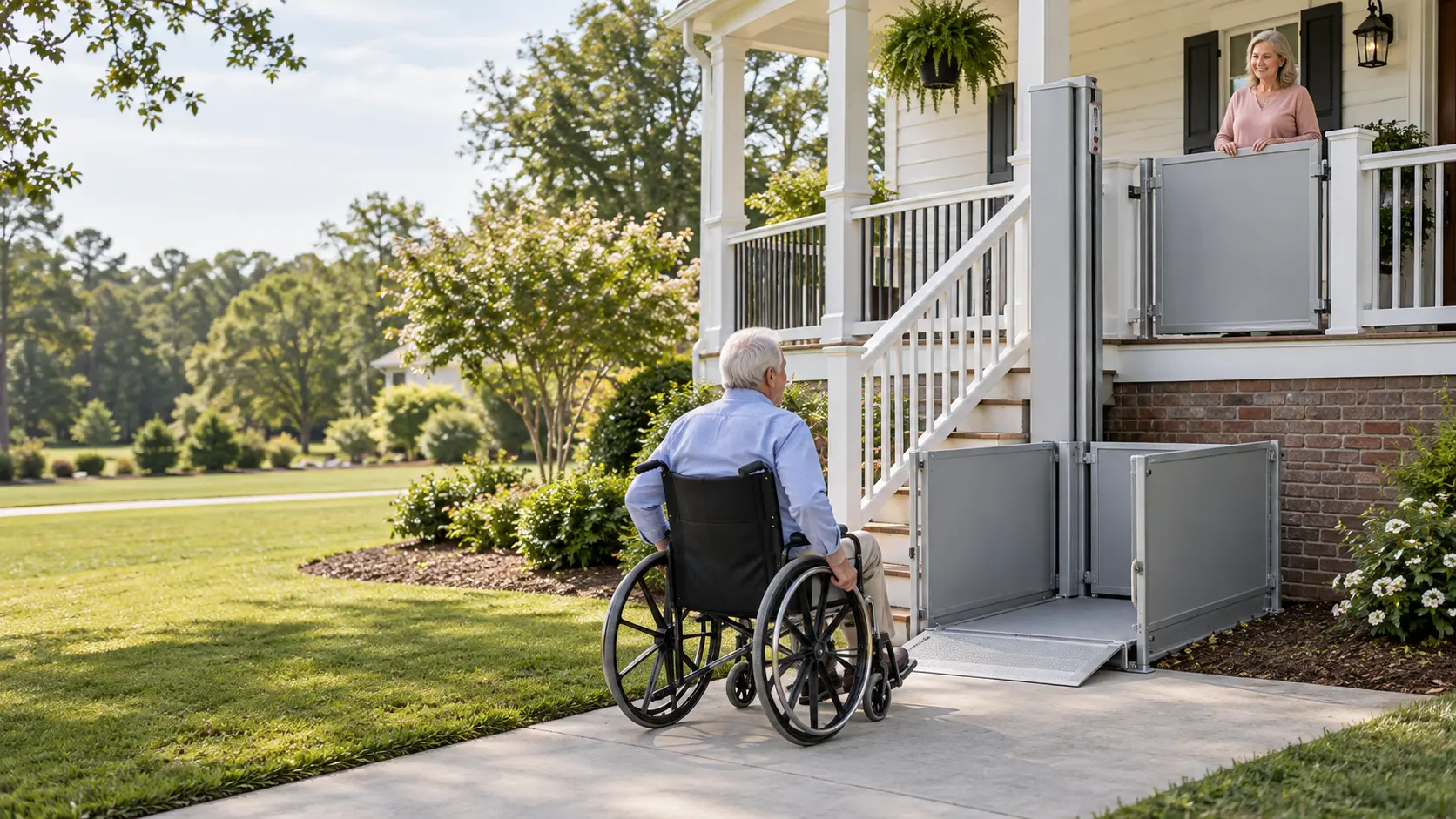
Wheelchair user approaching an outdoor vertical platform lift at an Alabama home
Residential · Qualifying Commercial · Indoor · Outdoor
Access Over Level ChangesPlatform lifts can address steps and nearby landings.
Equipment for the PropertyPlanning begins with the user, space and route.
Installation and ServiceContinued support from an Alabama elevator company.

More Accessible Entrances and Levels

A Practical Way to Overcome Steps

A wheelchair lift, also called a platform lift, carries a person and a compatible mobility device on a platform.

Depending on the equipment and property, it may provide access over a short set of steps, to a porch or entrance, or between nearby floor levels.

Common Applications

  • Front or side entrances
  • Porches and decks
  • Garages
  • Raised interior floors
  • Churches
  • Offices
  • Community properties
  • Other level changes

The user, mobility device, travel height, landing space and surrounding property conditions must all be evaluated.

Understanding the Equipment

Two Ways a Wheelchair Lift May Travel

The term wheelchair lift can describe more than one type of platform equipment. The property, route of travel and user help determine which design may be appropriate.

Vertical Platform Lifts

A vertical platform lift moves primarily up and down between landings. It may be considered for a porch, entrance, garage, raised interior level or another limited elevation change.

  • Total travel height
  • Platform dimensions
  • Entry and exit direction
  • Landing space
  • Gates or doors
  • Electrical requirements

Inclined Platform Lifts

An inclined platform lift travels along a staircase while the user remains on the platform. Stair width, turns, landings and parked-platform space require careful review.

  • Staircase width
  • Travel direction
  • Upper and lower landings
  • Pedestrian space
  • Nearby doors
  • Parking position

Not every lift type is appropriate or available for every property. Call to discuss the application.

Accessible Living at Home

Residential Wheelchair Lift Options

Steps at a home entrance, garage, porch or interior level can make important areas difficult to reach. A residential wheelchair lift may provide a more direct route while allowing the user to remain in a compatible mobility device.

  • User and mobility device
  • Platform size and capacity
  • Travel height
  • Landing space
  • Entry and exit direction
  • Indoor or outdoor placement
  • Nearby doors and walkways
  • Future service access
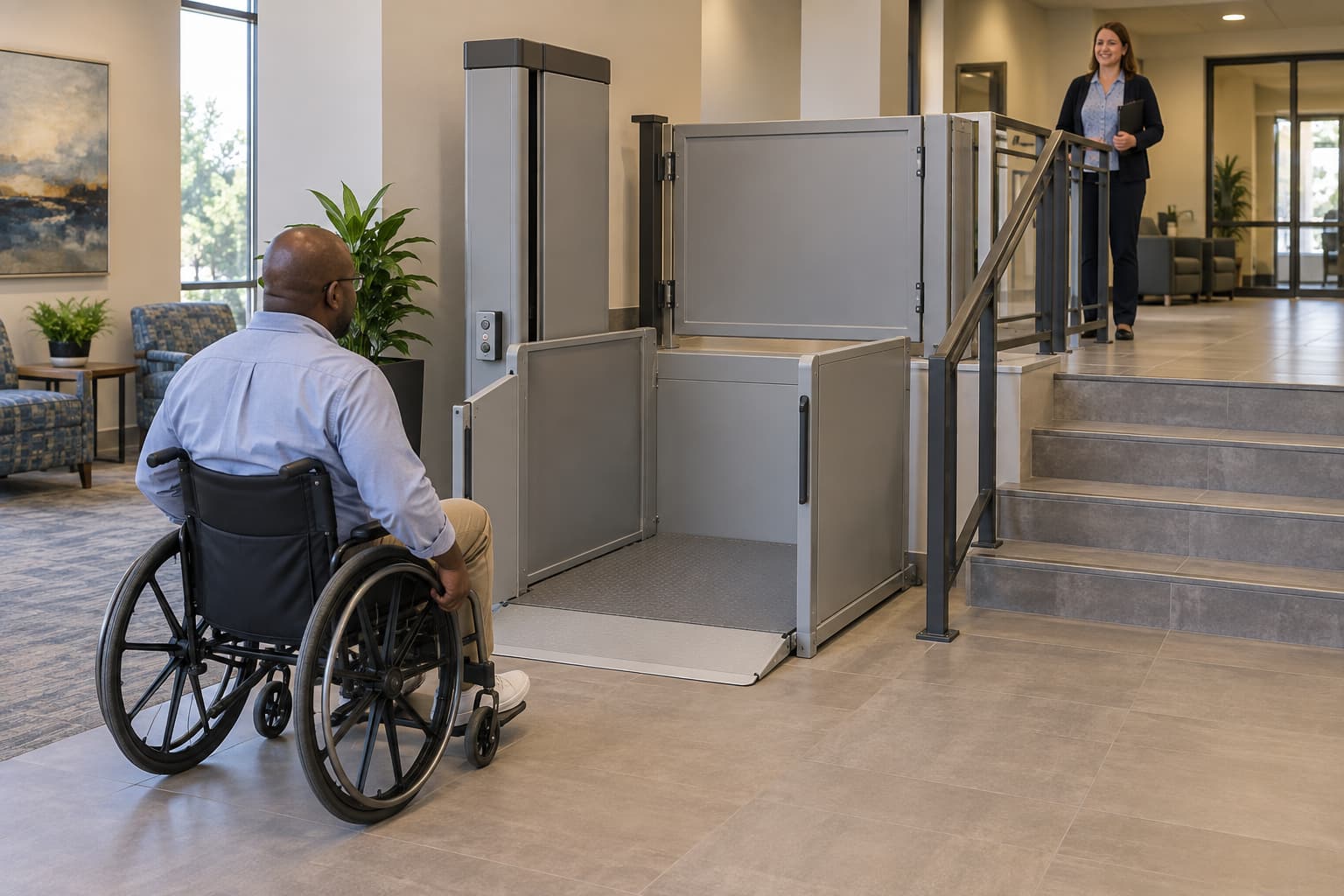
Wheelchair user approaching an indoor commercial platform lift in Alabama
The platform, landings and approach must work together

Compare Accessibility Options

Wheelchair Lift, Stairlift or Home Elevator?

The right equipment depends on how the person travels, the distance being covered and the property itself.

Wheelchair Lift

Allows a user to remain on a compatible wheelchair or mobility device while traveling over steps or between nearby levels.

Stairlift

Carries a seated rider along a staircase and may suit someone who can safely transfer to and from the chair.

Explore stairlift services.

Residential Elevator

Travels through a dedicated space and may be considered when access is needed between multiple floors.

Explore residential elevators.

Public-Facing Locations

Wheelchair Lifts for Qualifying Properties

A platform lift may be considered when a change in elevation affects access to an office, church, community building, multifamily property or other public-facing location.

These projects may involve public use, accessible routes, traffic flow, property-management coordination, electrical work, construction, permitting and inspection.

Commercial Elevator Service & Repair

Important Planning Questions

  • Who will use the lift?
  • How will users approach it?
  • Where are the landings?
  • How will gates operate?
  • What construction is needed?
  • Who confirms requirements?

Installing a particular lift does not automatically make an entire property ADA compliant. Requirements must be evaluated for the specific property and use.

Review official federal information at ADA.gov.

Plan for the Environment

Indoor and Outdoor Wheelchair Lifts

Indoor Installations

Indoor projects require enough room for the platform, landings and the user’s approach and departure.

  • Floorplan
  • Hallway clearance
  • Doorways
  • Landing space
  • Overhead conditions
  • Electrical service
  • Everyday traffic
  • Future service access

Outdoor Installations

Exterior equipment must be intended for outdoor conditions and properly planned around the property.

  • Weather exposure
  • Drainage
  • Foundation conditions
  • Landing surfaces
  • Walkways
  • Electrical requirements
  • Equipment protection
  • Seasonal debris

A Better Equipment Recommendation

Start With the User and the Property

A product photograph alone cannot show whether a particular model will fit the space or meet the user’s needs.

Understand the User

  • Manual or power wheelchair
  • Mobility-device dimensions
  • Combined requirements
  • Control access
  • Approach and departure
  • Caregiver assistance
  • Current mobility needs
  • Anticipated needs

Understand the Property

  • Travel height
  • Landing configuration
  • Entry and exit direction
  • Nearby doors
  • Walls and railings
  • Indoor or outdoor setting
  • Electrical availability
  • Construction conditions

Complete records and measurements are helpful but not required before calling. Tell us what you know.

From the First Call to Setup

The Wheelchair Lift Installation Process

Every project is different, but most begin with the same basic steps.

1

Initial Conversation

Discuss the property, user, mobility device and level change that needs to be addressed.

2

Property Evaluation

Review travel height, landings, approach space and surrounding conditions.

3

Equipment Recommendation

Discuss a lift type and configuration suited to the application.

4

Project Coordination

Identify preparation, electrical work, access, scheduling and applicable requirements.

5

Installation and Setup

Install and check the selected equipment for the project.

6

Operating Guidance

Review basic operation, controls, gates and appropriate everyday care.

Timing depends on equipment, site preparation, availability, scheduling and applicable approvals.

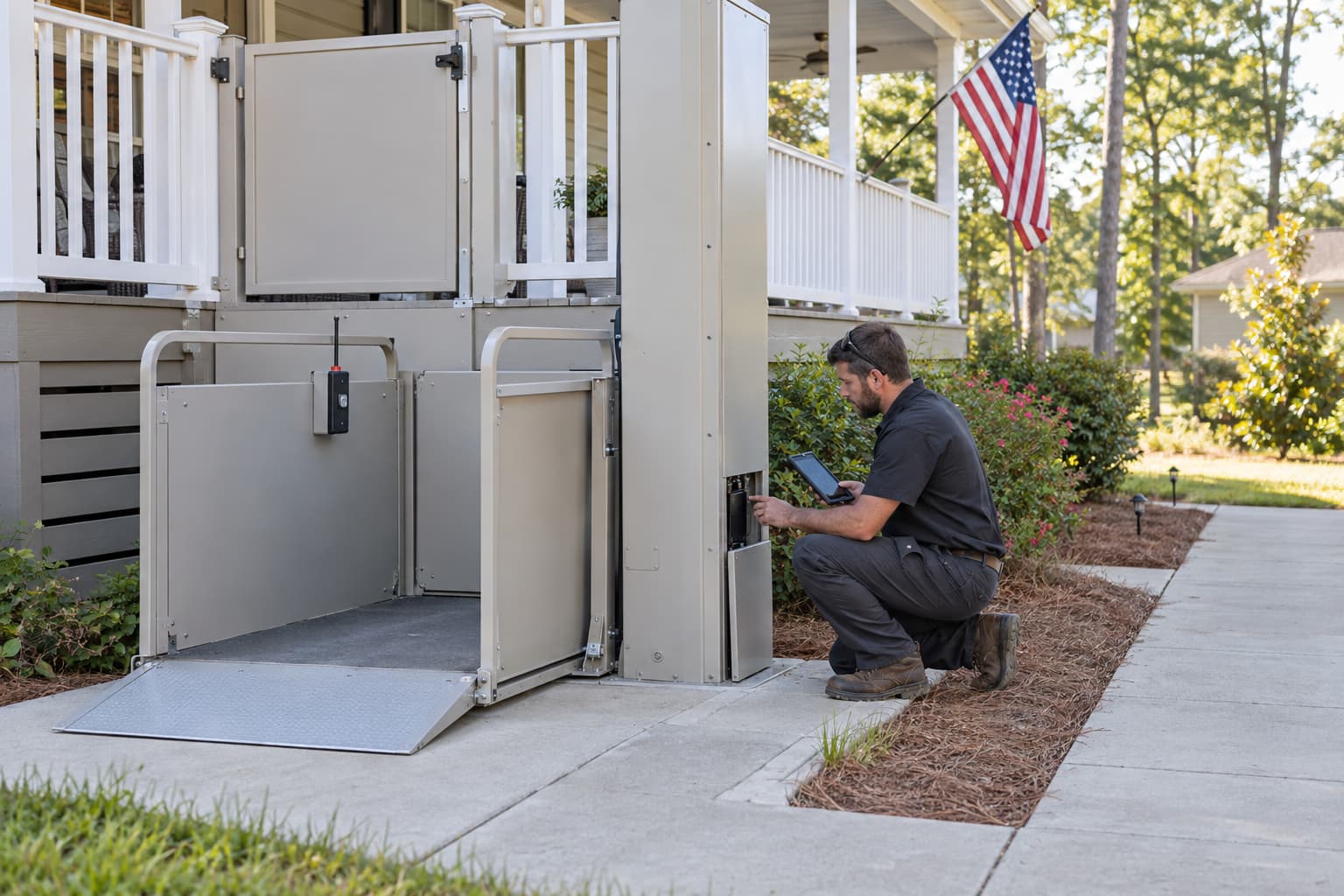
Technician inspecting an outdoor wheelchair lift at an Alabama home
Service for qualifying wheelchair-lift equipment

Help for Existing Equipment

Wheelchair Lift Service and Repair

Ray Strong Elevators provides service and repair for qualifying wheelchair-lift equipment throughout its Alabama service area.

  • Lift will not move
  • Intermittent operation
  • Stopping during travel
  • Unusual sounds
  • Gate or door problems
  • Control concerns
  • Battery or charging issues
  • Fault indicators
  • Weather-related concerns
  • Older equipment evaluation
Call for Wheelchair Lift Service

Prepare for Your Call

Information That Helps With a Service Request

Provide what you can. Missing records should not stop you from calling.

  • Manufacturer
  • Model
  • Approximate age
  • Indoor or outdoor setting
  • Vertical or inclined type
  • Description of problem
  • Fault code or indicator
  • Recent service history
  • Equipment photographs
  • Property location

Do not bypass gates, locks or safety devices. Do not remove covers or attempt internal repairs.

Ongoing Equipment Care

Maintaining Your Wheelchair Lift

A wheelchair lift is equipment that people depend on for access. Pay attention to changes in its operation as it ages.

Keep the platform, landings and surrounding areas clear. Do not apply lubricants, cleaning products or adjustments unless approved for the equipment.

Maintenance cannot guarantee that a lift will never require repair, but it can provide an opportunity to identify changing components and address service needs.

Service Planning May Consider

  • Manufacturer and model
  • Equipment age
  • Frequency of use
  • Indoor or outdoor location
  • Platform configuration
  • Previous repairs
  • Current condition
  • Manufacturer guidance
  • Warranty requirements
  • Inspection requirements

Elevator Maintenance & Service Contracts

Know Who Handles Each Responsibility

Permits, Inspections and Accessibility Requirements

Equipment selection, installation, electrical work, construction, permitting, inspection and accessibility requirements are related but separate parts of a project.

Property owners may need to coordinate with contractors, design professionals, local authorities or accessibility professionals depending on the lift and property.

Official Resources

Alabama maintains an elevator safety inspection program and licenses people involved in elevator construction and repair. Review current state information through the official Workforce Alabama Elevator Safety resource.

For federal accessibility information affecting businesses, nonprofit organizations and government properties, visit ADA.gov.

A lift may be one component of an accessible route. Installing equipment does not by itself confirm that the entire property meets every applicable requirement.

Local Service From Ashville

Wheelchair Lifts Across Our Alabama Service Area

Ray Strong Elevators serves homeowners and qualifying properties throughout the Birmingham, Huntsville–Decatur and Montgomery regions, along with surrounding Alabama communities.

Service in selected communities of Georgia, Mississippi and Florida near Alabama may be available. Coverage depends on location and project type and must be confirmed by phone.

Confirm Service in Your Area

Helpful Answers

Frequently Asked Questions About Wheelchair Lifts

Is a wheelchair lift the same as a platform lift?

The terms are often used for the same general type of equipment. A platform lift carries a person standing on the platform or using a compatible wheelchair or mobility device. Designs and permitted uses vary by model and application.

How does a vertical platform lift differ from an inclined platform lift?

A vertical platform lift travels primarily up and down. An inclined platform lift follows a staircase. The property layout, travel distance and available space help determine which may be appropriate.

Can someone remain in a wheelchair while using the lift?

That is the purpose of many platform lifts. The user, mobility device and selected equipment must still be evaluated for platform dimensions, capacity, entry and exit.

Can a wheelchair lift accommodate a power wheelchair or mobility scooter?

Some models may accommodate certain power wheelchairs or scooters. Device dimensions and combined passenger-and-device requirements must be compared with the equipment specifications.

How are platform size and equipment capacity determined?

The user, mobility device, entry direction, available space and expected assistance should be considered alongside the specifications of the selected model.

What determines the travel height of a vertical platform lift?

Travel height is based on the elevation difference between landings. The model, property conditions, landing design and applicable requirements can affect the configuration.

How do users enter and leave the platform?

Entry and exit can be configured in different directions depending on the equipment and site. Landing space, gate position, turning room and surrounding walkways must be evaluated.

What are interlocked gates and doors?

Interlocks coordinate the operation of certain gates or doors with the lift position. Features vary by model. Gates, locks and other safety-related components should never be bypassed.

What happens during a power outage?

Power-loss operation varies by equipment. Some models may include battery-supported functions or emergency-lowering features. Confirm the capabilities and instructions for the selected lift.

What should be evaluated for an outdoor wheelchair lift?

Outdoor planning may involve weather exposure, drainage, foundation conditions, landing surfaces, electrical requirements, surrounding walkways and equipment protection.

Can a caregiver travel with the wheelchair user?

That depends on platform dimensions, capacity, manufacturer instructions and intended use. Confirm this requirement before choosing equipment.

What is different about planning a lift for a public-facing property?

A public-facing project may involve additional accessibility, permitting, inspection, traffic-flow and property-management considerations.

Does installing a wheelchair lift automatically make a property ADA compliant?

No. A lift may be one part of an accessible route, while compliance can involve many additional property features and responsibilities.

What changes can indicate that a wheelchair lift needs service?

Call if the lift stops unexpectedly, operates intermittently, makes unusual sounds, moves differently, displays a fault indicator or develops problems with controls, gates or doors.

Can an existing wheelchair lift be relocated or reused?

Possibly, but it should not be assumed. Condition, age, configuration, manufacturer requirements and compatibility with the new location must be evaluated.

What information should I provide when requesting repair?

Provide the manufacturer, model, approximate age, lift type and description of the problem when available. Photographs, indicators and service records may also help.

Start With a Conversation

Let’s Discuss Better Access for Your Property

Tell us where the property is located, who will use the lift and what steps or level change need to be addressed. If you already have equipment, provide the manufacturer, model and service concern when available.

Call (205) 238-6665
Based in Ashville · Serving Birmingham, Huntsville, Decatur, Montgomery and surrounding communities